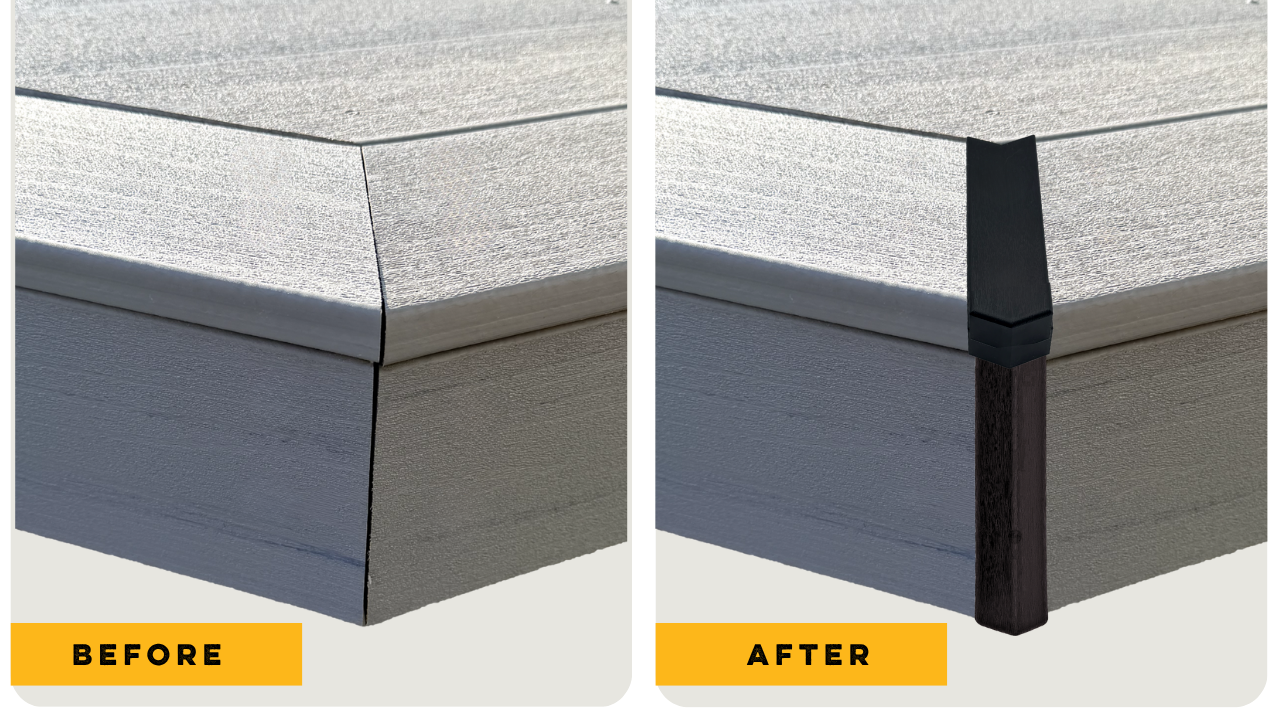
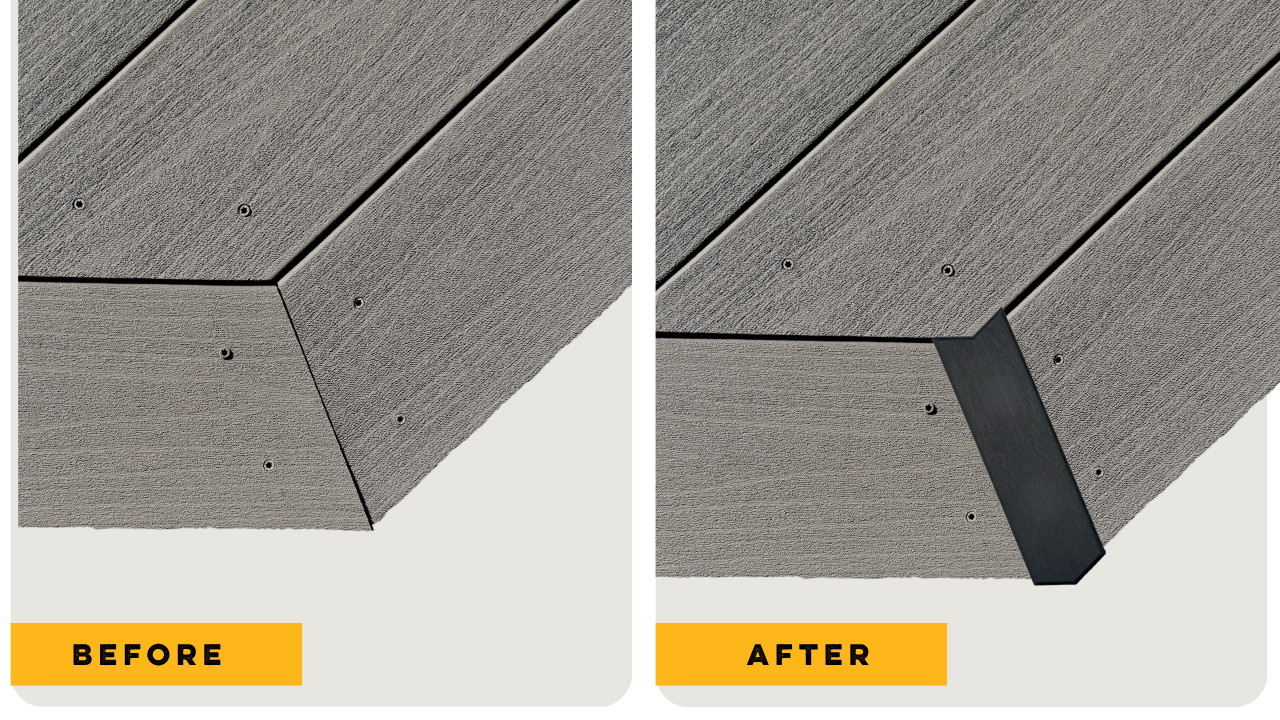
Treated Wood vs. Composite at the Corners
Composite decking isn't immune to corner gaps. Here's how treated lumber and composite each move — and why both need the corner protected.
Both treated wood and composite decking expand and contract with the seasons — so both open gaps at mitered corners. The difference is what drives the movement: treated lumber reacts mostly to moisture, composite reacts mostly to temperature. Either way, the corner moves, and either way it needs to be capped.
How pressure-treated lumber behaves
Pressure-treated boards often arrive with a high moisture content and move a lot during their first seasons as they dry out. Even after they've seasoned, they stay hygroscopic — taking on moisture in humid weather and releasing it in dry spells — so they keep swelling and shrinking for the life of the deck. That ongoing moisture-driven movement is what reopens a mitered corner year after year.
How composite decking behaves
Composite is often marketed as low-maintenance, and homeowners frequently assume that means it won't move. It does. Composite boards respond mainly to temperature rather than moisture, expanding in heat and contracting in cold. So while a composite deck won't dry-shrink the way fresh treated lumber does, its corners still open and close with the temperature swing between summer and winter.
Side by side
- Treated wood — moves most early as it dries; keeps reacting to humidity long-term; moisture is the main driver.
- Composite — dimensionally steadier day to day, but expands and contracts with temperature; heat is the main driver.
- Both — move enough at the ends of long boards to open a visible corner gap over a season.
Why the fix is the same for both
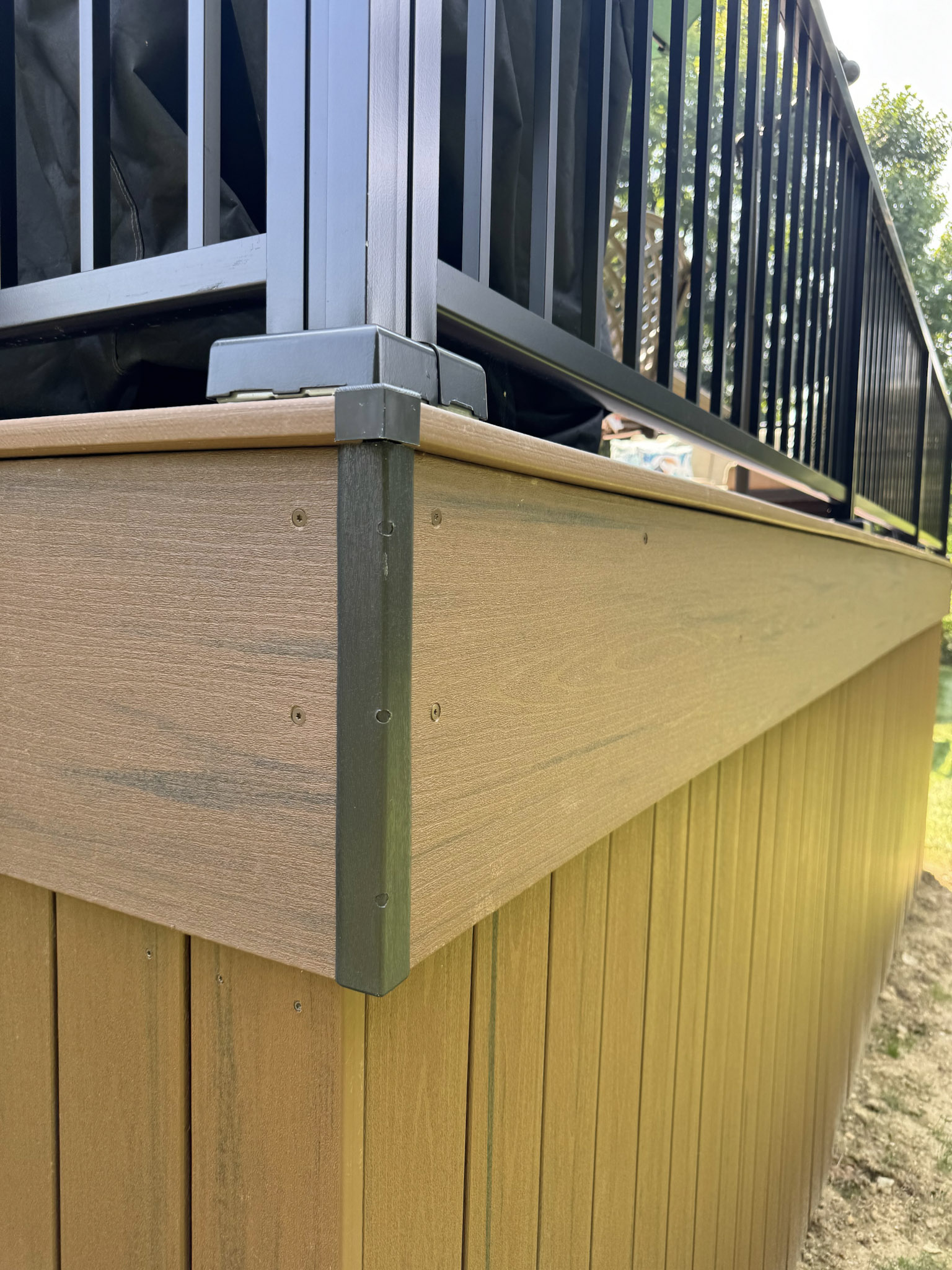
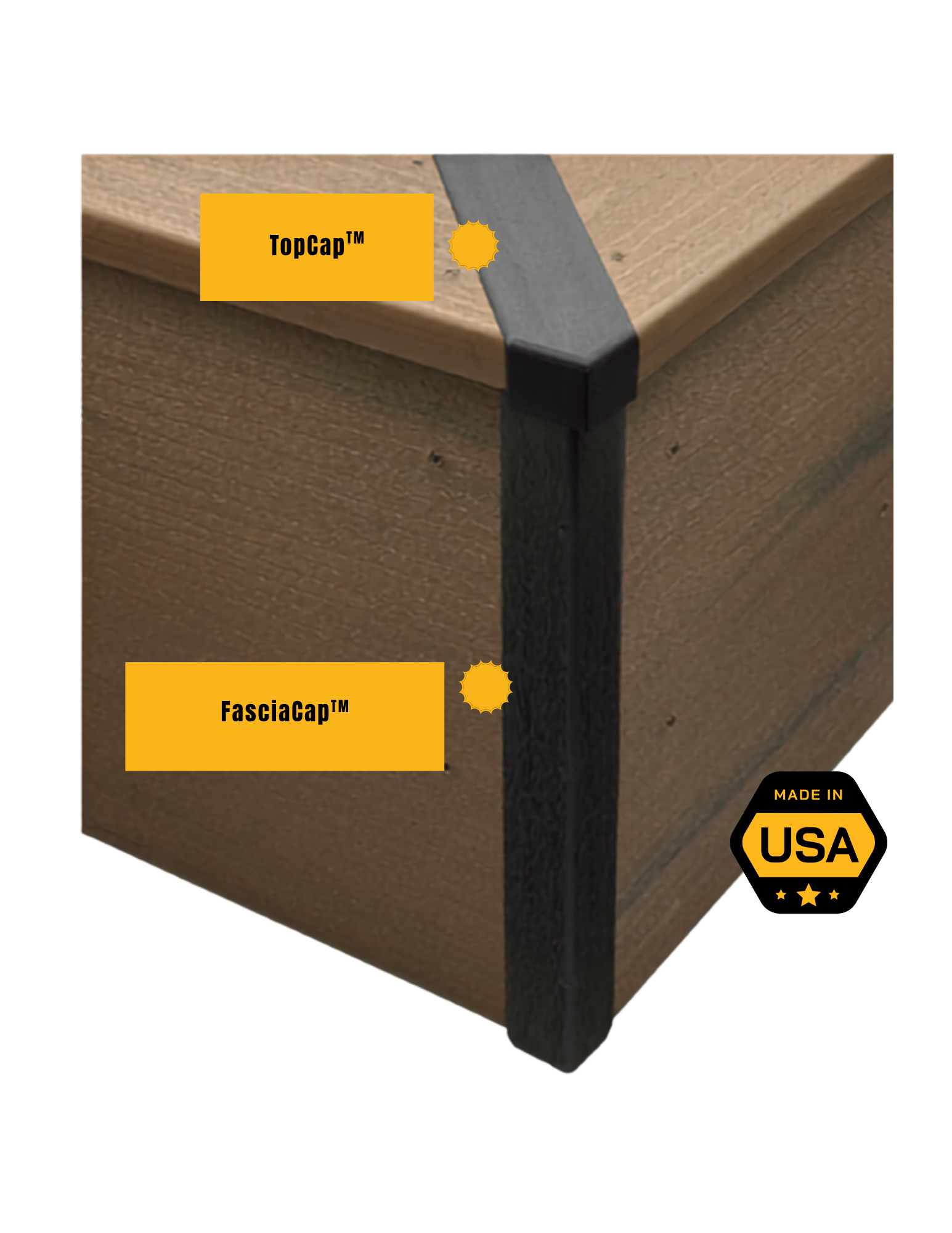
Because the outcome is identical — an open corner — the solution is identical too. Rather than picking a material and hoping it stays put, you cap the corner so the boards can move freely underneath without the gap ever showing. GAPCAP is engineered to work on treated and composite decking alike, in Black, Gray, and Brown to match the board.
Frequently asked questions
Yes. Composite boards expand and contract too — they respond more to temperature than to moisture — so mitered corners in composite decking still open with the seasons.
Pressure-treated lumber tends to move a lot early on as it dries out, then continues reacting to humidity for the life of the deck. Composite moves mainly with temperature. Both move enough to open corner gaps.
Yes. GAPCAP™ is engineered to work on both treated and composite decking, and on new or existing decks.